
1

Untreated surface
All stone surfaces have very fine pores, so the surface stays wet for a long time.
All stone surfaces have very fine pores, so the surface stays wet for a long time.

After a 3-step application, the AntiSlip system bonds into the pores and stays ready to prevent slipping.

The system reacts to moisture at once and creates a highly effective anti-slip condition. Even moisture from a wet shoe is enough. The system rises on the surface and makes walking safe.
Most slips come from the floor itself. About 35% of accidents on wet floors result in death. Antislip applications prevent nearly 100% of accidents on slippery floors.
When the floor is wet or damp, a noticeable anti-slip effect is felt with bare feet or shoes.
There are different products that can be applied to all types of surfaces.
It is a liquid product for all mineral surfaces such as ceramic, granite, marble, natural stone, concrete and tiles.
Glass, fiberglass, metal, wood, ceramic, granite, marble, tiles, epoxy, PVC and linoleum.
Fiberglass, metal, wood and epoxy surfaces.
Laminate, vinyl, PVC, linoleum and wood — anti-slip and anti-scratch.
Only on very glossy floors it may slightly reduce shine.
No. All of our products are antibacterial.
Yes. SWAP tests on the floor show no bacterial growth.
No. Any cleaning chemical and machine can be used.
Yes. Measurement and reporting are done with devices developed to German DIN 51131 and delivered after application.
No. Applications are carried out by our professional team.
Yes. The floor can be used immediately after application.
Antislip STONE 5 years, Antislip NANO 3 years, Antislip MARIN 3 years and Antislip MAX 10 years warranty.
Yes. A warranty document and application certificate are issued after application.
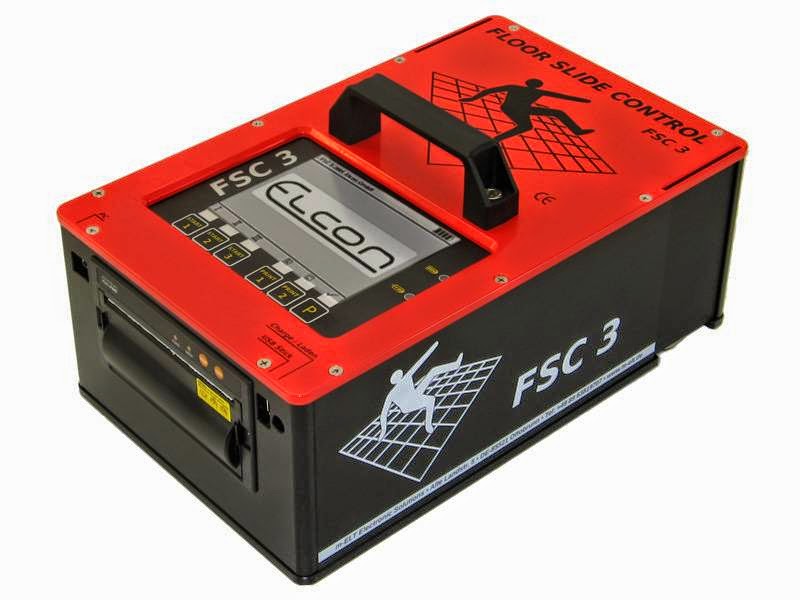
Did you know your floors can be measured?
FSC 3 was developed in 2008 to meet the requirements of the new DIN 51131 standards. It makes accurate, easy measurement and reporting to DIN 51131. Wetness or incorrect chemicals increase slip risk. FSC 3 determines static and dynamic values to DIN and helps prevent accidents through precise measurement.
With special skids underneath it simulates walking, measures the friction coefficient and can print the report with its built-in printer. FSC 3 is the only floor meter whose reports are accepted as expert evidence in German courts and across Europe.
Turkey distributor: Kaymaz Zemin Sistemleri ve Kimyasalları San. ve Tic. Ltd. Şti.
In Turkey, floor measurement can now be done to the values set by DIN 51131 together with Kaymaz Zemin Sistemleri. Consumers often do not know whether dynamic or static friction should be used, and some firms only measure static values. This misleads the customer.
Static friction: the force that starts a body moving from rest on a surface.
Dynamic friction: the force that keeps a body moving after it has started.
Example: the force to start a standing table moving is static; the force to keep it moving is dynamic (kinetic). For anti-slip floor applications the correct value is the dynamic friction coefficient, because slipping is a dynamic action. A person standing still does not fall by slipping, so the static value is not meaningful here.
Dynamic and static values differ by about 40–60%. If dynamic friction is 0.64 µ, static friction on the same floor is about 0.90 µ. When you have an anti-slip application done, ask for the dynamic friction value. Otherwise you may not get the result you expect.
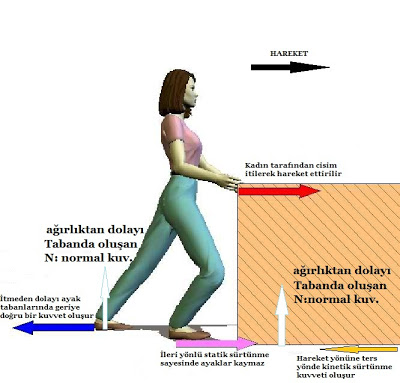
Friction force is the force between two objects in contact that resists motion. Motion is not required for this force to exist.
What is the friction coefficient?
It is the ratio of the friction force between two bodies to the force pressing them together. It depends on the materials and is usually between 0 and 1. If it is 0, the object is not in contact with the surface. If the surface is sticky, the coefficient often cannot be measured correctly. Static friction: the force until the body starts moving. Dynamic friction: the friction force while the body is moving.